SanitiseServices 1300 410 324
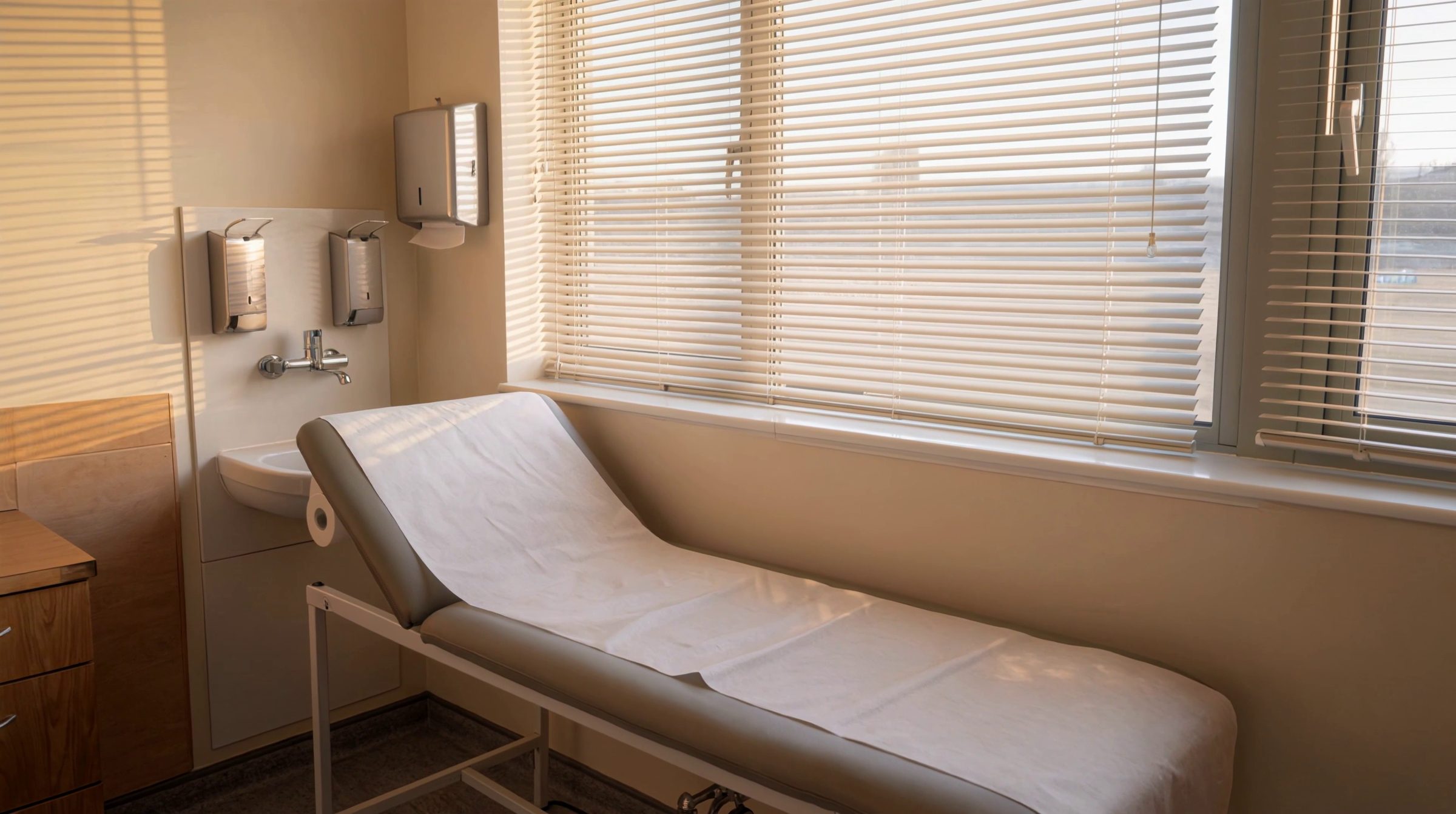
Clinic consulting room

Clinic cleaning and sanitising, Melbourne's northern suburbs

Cleaning for medical, dental and radiology clinics

Every high touch surface gets a hospital grade disinfectant rated for 30 days. Once a month we test it in front of your practice manager, and you keep the result.

What the monthly test is for

A wiped surface looks the same whether the product worked or not. High touch surfaces carry a coating rated for 30 days. Every month we test those surfaces in front of your practice manager and write the result down.

The program

What the program includes.

Every clinic starts with a full deep clean at no extra charge. After that it runs on a set schedule, built around the rooms that matter most. Same products, same checklists, same signed log at every site.

01

Initial deep clean

First visit, included

Before the schedule starts we take the clinic back to zero. Inside the ceiling and door vents, on top of railings and frames, under every desk and bed, into the corners. Curtains, curtain rails, door handles and door jambs. Every clinical bed sanitised. It takes as long as it takes and it is part of the service, not an extra line on the quote.
02

Every scheduled visit

Maintenance clean

The whole clinic, every visit. Consulting rooms, reception, bathrooms, kitchen, toilets, entrance glass, all door handles, bins emptied and re-lined from liners we supply. HEPA filtered bagless vacuums throughout. What each visit covers.

03

Weekly and fortnightly

Treatment and doctors rooms

A treatment room sanitising pass every week. Every fortnight the treatment rooms and doctors rooms get the full high touch sanitising clean: beds, trolleys, step stools, scales, height measures, dispensers, every piece of fixed equipment in the room.

04

Group program

Two or more clinics

Everything above at every site, plus a whole of practice fog inside the first fortnight, insect treatment every three months with residual protection, and monthly surface testing. One specification, one calendar, one invoice. What the group program includes.

The schedule is written to sit inside your infection prevention and control policy. Price is set by clinic size, after a walkthrough. We bring our own equipment and products to every visit, including two hospital grade disinfectants listed in the ARTG (AUST L 69000 and ARTG 421991), and the log is signed on the way out. Each sector works to its own standard: see dental practices and radiology and imaging.

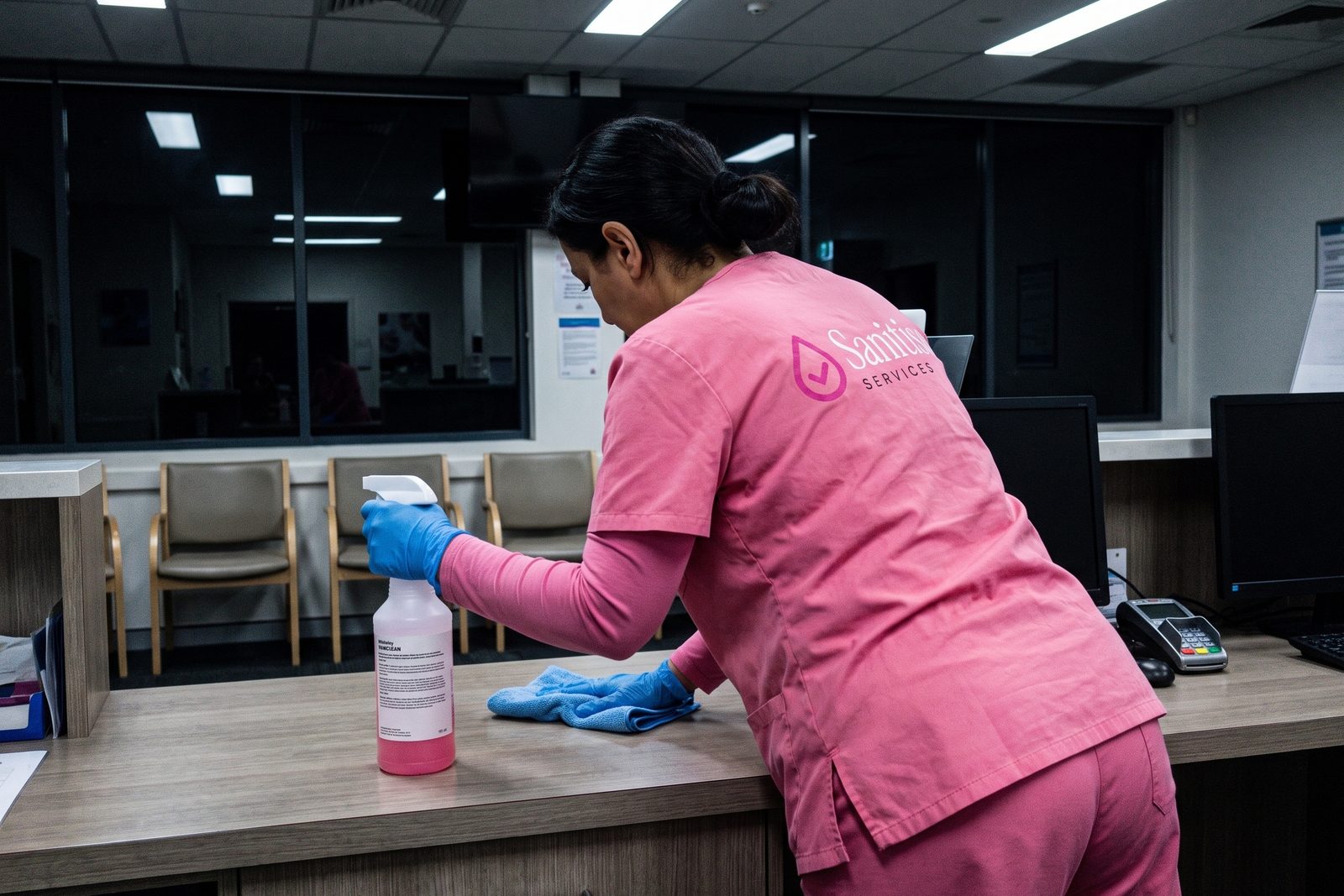
Cleaning a reception counter

What each visit covers

The maintenance clean, the weekly pass, and the fortnightly sanitise.

The room-by-room schedule lists every surface, product and frequency.

Every visit

The whole clinic

  • Every leather and vinyl chair wiped down, doctors chairs included. Desks, benches and high areas de-dusted.
  • Under and behind computers, under beds, sinks, mirrors, soap dispensers and towel rails.
  • All door handles through the clinic. Front entrance glass. Reception and waiting in full.
  • Bathrooms, toilets and kitchen in full. Bins emptied and re-lined with liners we supply for the practice.
  • HEPA filtered bagless vacuuming throughout, then carpet sanitiser. Hard floors mopped with hospital grade disinfectant.
  • High touch points sprayed with a hospital grade disinfectant rated for 30 days residual protection.

Weekly

Treatment room sanitising

  • Treatment room floor sanitation mopped, every bench, handle, cupboard front, bin lid and foot pedal wiped.
  • Clinical bed surfaces sanitised, paper roll holder and frame included.
  • Every fixed item in the room: trolleys, step stools, scales, height measures, waste bins.

Fortnightly

Treatment and doctors rooms, deep sanitise

  • The full high touch pass through every treatment room and every doctors room.
  • Bed frames, bases and mattress covers decontaminated. Curtains and curtain rails checked and wiped.
  • Door jambs, frames, skirting and sills. Behind and beneath the fixed furniture.
  • Residual protectant reapplied to the surfaces that carry it, and recorded.

Pathology rooms sit on the same schedule as the treatment rooms. Any additional rooms the practice rents out are included where that is agreed at the walkthrough. Frequently touched surfaces still need a daily wipe under the RACGP guidelines. Your team's daily pass sits alongside ours, and the schedule shows both.

Cleaning equipment

What we use

Hospital grade, and one of them keeps working for 30 days.

The statements below are quoted from each product's entry in the Australian Register of Therapeutic Goods, or from its manufacturer, as marked.

Viraclean

Whiteley. Hospital grade disinfectant listed in the ARTG, AUST L 69000.

Every visit, on desks and general surfaces. Whiteley's ARTG entry describes it as a hard surface disinfectant effective against a broad range of bacteria including MRSA, VRE, CPE/CRE and Acinetobacter, and proven effective against Candida albicans, hepatitis B, herpes simplex, influenza and coronaviruses including SARS-CoV-2 (COVID-19).

pH neutral, non corrosive to metals. Not used on medical devices.

Forcefield 4in1 + Protector

Hospital grade disinfectant listed in the ARTG, ARTG 421991.

On every high touch surface, and fogged whole of practice in the first fortnight. Its ARTG entry states it is effective against bacteria, fungi and COVID-19 (SARS-CoV-2), with 30 days effective residual activity against COVID-19 (SARS-CoV-2) after a single application. Hard surfaces only, not for medical devices.

This is the product the monthly strip test checks for.

Forcefield surface test strips

Forcefield. Manufacturer's test method for its own coating.

Every month, at every clinic. A strip test on the treated high touch surfaces to confirm the residual coating is still present. Anything that fails is re-treated on the same visit and the result is written into the log with the date and the surfaces tested.

Sansol

Whiteley. An acidic cleaner for washrooms. No ARTG number is recorded for it.

Bathrooms and toilets, every visit. A foaming heavy duty bathroom product. Whiteley states it removes body fats, hard water deposits, rust, soap scum, algae and mildew, and kills odour causing bacteria in damp areas such as drains. Used on tiles, glass, stainless steel and benchtops.

Carpet and soft furnishings

Actichem Biosan II, AUST L 332364. Glen 20, ARTG 382090.

After every vacuum. Carpet is sanitised with Biosan II at working dilution, a hospital grade disinfectant listed in the ARTG. Waiting room and consulting chairs and other soft furnishings are treated with Glen 20, which is listed for soft as well as hard surfaces.

Carpet is pre-tested at each site before the first treatment. Steam extraction is a separate service, quoted on request.

Equipment and consumables

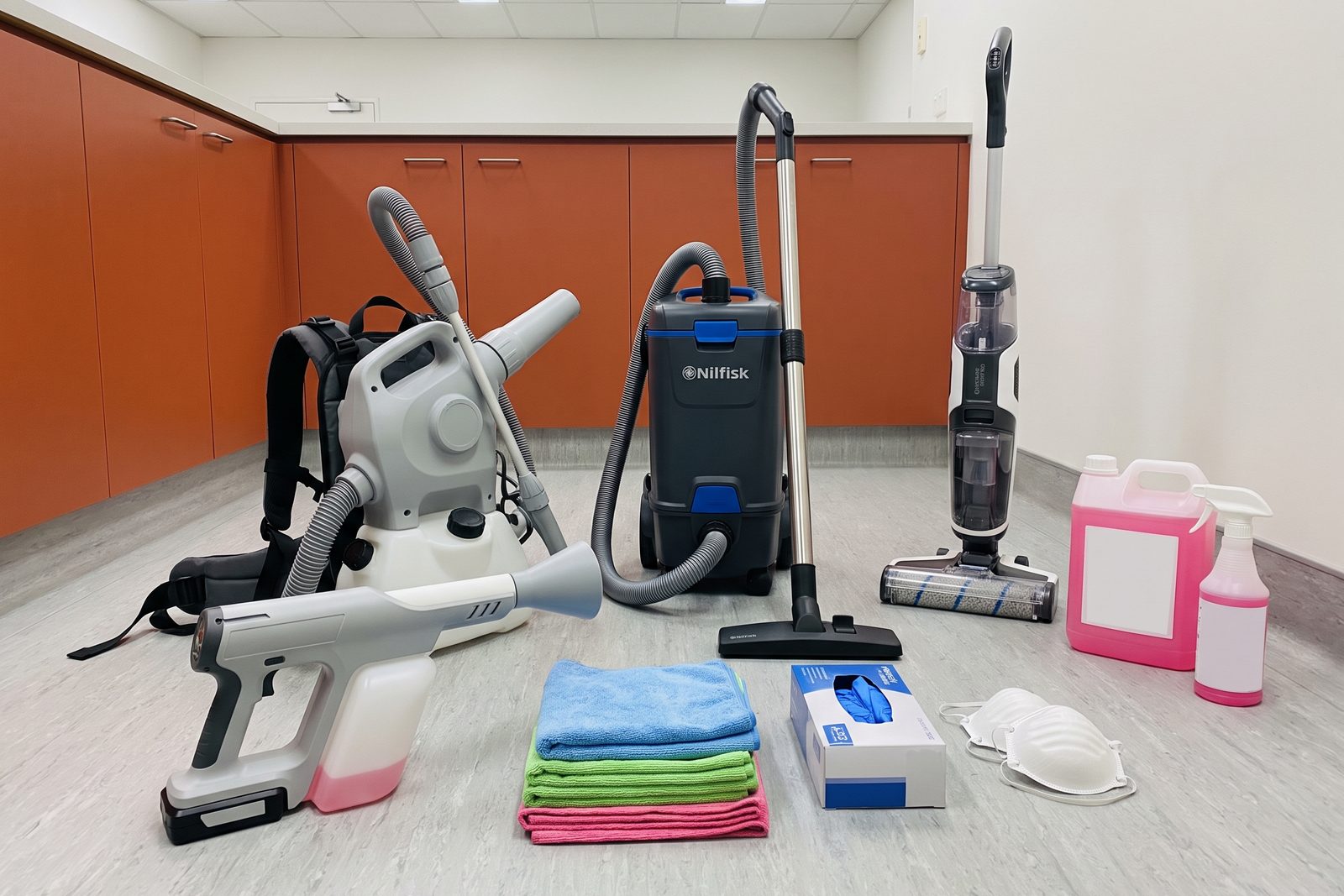
HEPA H13 vacuums. Colour coded microfibre. Bin liners supplied.

Ours, at every visit. Sealed H13 HEPA filtration vacuums, so what comes off the floor stays in the machine. Colour coded microfibre on the national red, blue, green and yellow scheme, so a bathroom cloth never reaches a consulting room bench. Disinfectant wipes for high touch points and seating, and separate screen wipes for clinical IT.

We also supply the bin liners the practice uses between our visits.

Ambient odour control

Metered dispenser. Odour control, not a disinfectant.

On request. A metered dispenser in reception and the amenities, cartridge changed on our schedule, so the clinic holds a clean neutral note between visits rather than a chemical one. We call this odour control because that is what it is. It does not disinfect air and we do not present it as infection control.

A product list and current safety data sheets go into your hazardous chemicals register on day one and are reissued whenever a product changes.

Signing a cleaning log

The evidence

What your surveyor sees.

The RACGP Standards name three things for contract cleaning. A written agreement setting out the schedule, the products and the areas covered. A cleaning log. And being able to show the practice is cleaned regularly. You get all three, on paper and on site, plus a monthly test result.

Room-by-room schedule

Which surfaces, how often, with which product, by whom. Written to sit inside your infection prevention and control policy, and to show your team's daily tasks next to ours.

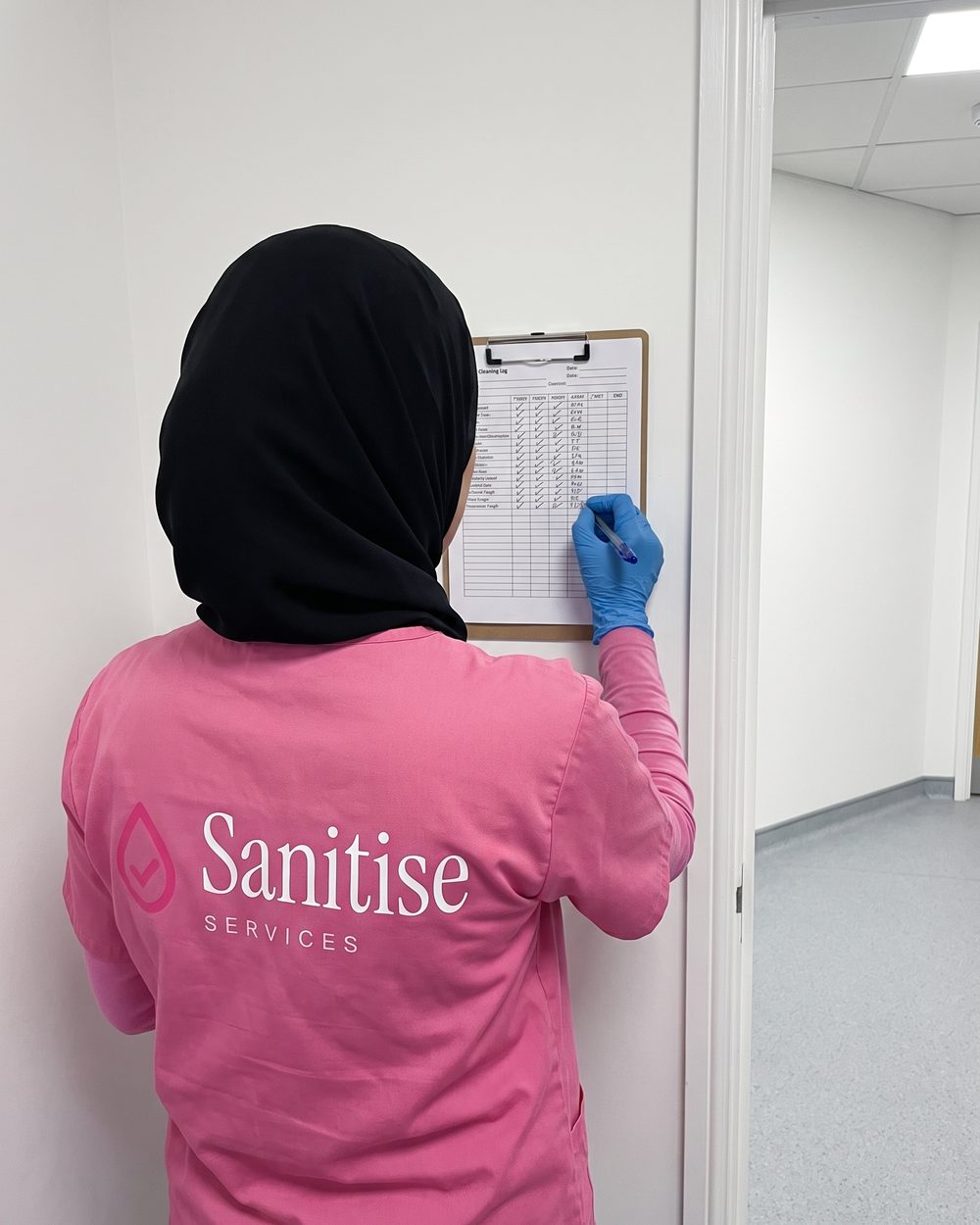
Signed log, kept at the clinic

A printed book that stays at your practice. Signed at every visit with the date, the tasks completed and the name of the person who did them.

Three printed checklists

The initial deep clean, the maintenance clean, and the treatment and doctors room sanitise. Worked through on the clipboard and filed, so the log is backed by the detail behind it.

Monthly surface test results

A dated strip test record for the treated high touch surfaces at each site, and a note of anything re-treated as a result.

Product list and safety data sheets

For your hazardous chemicals register. ARTG numbers on the list.

Application records and confidentiality

Date, product, ARTG number and areas treated for every fog and every insect treatment. Every person who attends your clinic has signed a confidentiality agreement before their first visit.

Our practice is visibly clean.

Indicator GP5.1F, RACGP Standards for general practices, 5th edition. Criterion GP4.1 requires the practice's infection control policy to cover environmental cleaning of clinical and non-clinical areas. The 6th edition, published August 2026, carries the same requirements in CG9 and CG10. Clinics accredited under the NSQPCH Standards are covered by Action 3.09.
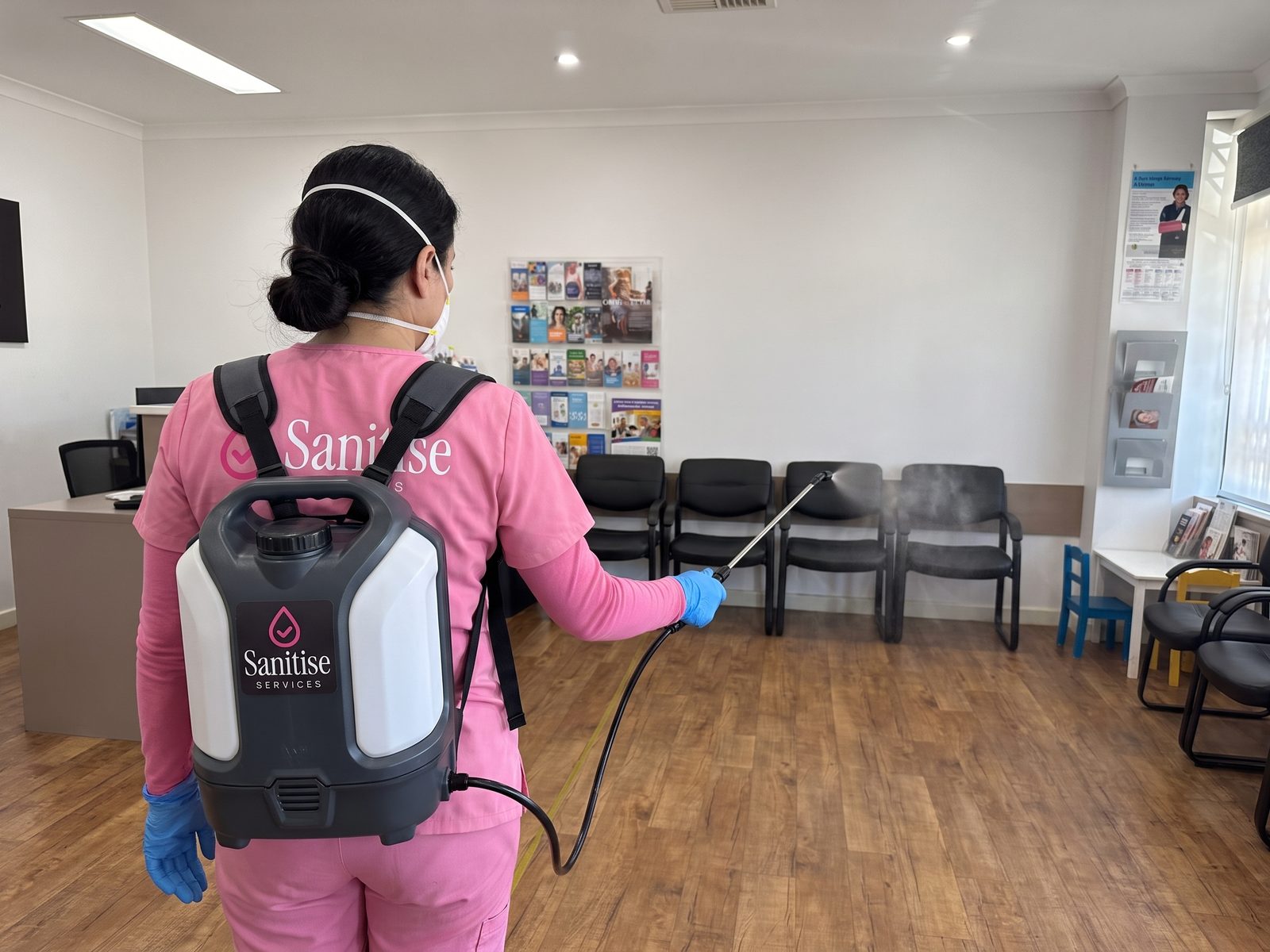
Fogging a waiting room

Group program, two or more clinics

One supplier across every site, and the treatments a single clinic usually buys separately.

For the operations manager looking after more than one clinic at a time.

01

Whole of practice fog, in the first fortnight

Not held over to an annual date. Every site is fogged after hours inside the first two weeks, so the group starts from a treated baseline. Application records are left on site.

02

Monthly surface testing

A Forcefield strip test on the treated high touch surfaces at every clinic, every month, to confirm the residual coating is still there. Where it has worn, the surface is re-treated on the same visit. The result goes in the log with the date and the surfaces tested.

03

Insect treatment every three months

Applied after hours once the practice is empty and cleared before opening, to the label. The products used state residual protection of up to six months, so treating every three months leaves no gap between treatments. Included at no charge and noted in the log.

04

Mould treatment

A ULV fog of Forcefield Mould Killer + Protector at every clinic, after hours and ventilated before opening, as the label directs. The manufacturer states up to 12 months protection against mould. A mould treatment, not a disinfectant, and separate from the hospital grade fog.

05

A signed log at every clinic

Each site keeps its own book. Signed at every visit, so every clinic is ready whichever year its accreditation falls in.

06

One written specification

The same room-by-room schedule, the same checklists, the same product list and safety data sheets at every site. One document for the group's infection control policy to reference.

07

One service calendar

Weekly, fortnightly, monthly and quarterly tasks scheduled across the group and tracked for you, so nothing waits for a surveyor to ask.

08

A bottle left with you

One 500ml bottle of the same 30 day residual disinfectant stays at each clinic for your own use. Use it on a surface that has just been delivered or installed, so it is protected from the first day. Use it on a room after a patient with a high infection risk, if you want it treated before our next visit. Replaced every three months, or sooner if you ask.

09

Our own equipment and products

HEPA vacuums, disinfectants, cloths and wipes come with us to every site and leave with us. Nothing for the practices to buy, store or lend.

10

One invoice, one contact, one request line

One invoice for the group, itemised by clinic. Any site can raise a request or report an issue through the request form and gets a reference number back.

Questions practices ask

Before you sign a contractor.

What happens on the first visit?

An initial deep clean of the whole clinic. Vents, railings, corners, under desks and beds, curtains and rails, door jambs, and every clinical bed sanitised. It is included in the program, not charged as a separate job.

How is this different from a normal commercial cleaner?

Three things. A residual disinfectant that keeps working for 30 days rather than until it dries. A strip test every month that shows the coating is still on the surface. And a written record of both that your practice can hand to a surveyor.

When do you come?

Outside consulting hours. Days per clinic are set in the service schedule and agreed before the first visit, along with keys and the alarm.

Do you bring the products, or do we?

We bring our own. HEPA vacuums, disinfectants, cloths and wipes come with us and leave with us. We supply the bin liners, enough for ten bin changes a day so you never run out between visits. Your practice buys its own paper towel and toilet rolls; we put them out at every visit, provided they are kept in the cleaners cupboard.

What do we get for accreditation?

A room-by-room schedule, a signed log kept at the clinic, three printed checklists, a product list with safety data sheets, monthly surface test records, and application records for every fog and insect treatment.

Are your staff under a confidentiality agreement?

Yes. Every person who attends a clinic signs a confidentiality agreement before their first visit, and works to a written privacy policy. Clinical records, screens and medicine storage are never accessed.

How do we ask for something extra or report a problem?

Through the request form on this site. Every request gets a reference number and is tracked to close, so nothing lives in a text message. Anything urgent, call the number above.

Can you take clinical waste and sharps?

No. Clinical, cytotoxic and sharps waste stay with your licensed clinical waste contractor. We handle general waste only.

Do you steam clean carpets?

Every visit includes HEPA vacuuming and a carpet sanitiser. Steam extraction of carpets and upholstery, and other one-off work, is extra and quoted on request.

How is it priced?

By clinic size and visit frequency, after a twenty minute walkthrough. No hourly rates and no prices on this page, because no two clinics are the same.

Boundaries

What stays with the practice.

  • Clinical, cytotoxic and sharps waste stay with your licensed clinical waste contractor. We handle general waste only.
  • The vaccine fridge is never opened, moved or unplugged.
  • Medicine cupboards and drug storage are not accessed.
  • Blood and body fluid spills are handled by your team's spill kit procedure, not by us.
  • Keys and alarm codes are agreed in writing before the first visit and returned in writing at the end.
  • Washroom consumables are yours. We refill the dispensers from your stock.

Walkthrough

Every clinic is walked before it is quoted.

Twenty minutes on site: rooms, floors, carpet, the treatment rooms and the bins. Then a written scope, a schedule and a price. No prices on this page because no two clinics are the same.

1300 410 324

Melbourne and surrounds. Single clinics and groups.

Already a client? Submit a request for an extra service or to report something.

Please add your name.

Please add the practice name.

Please add the suburb.

Please add a phone number.